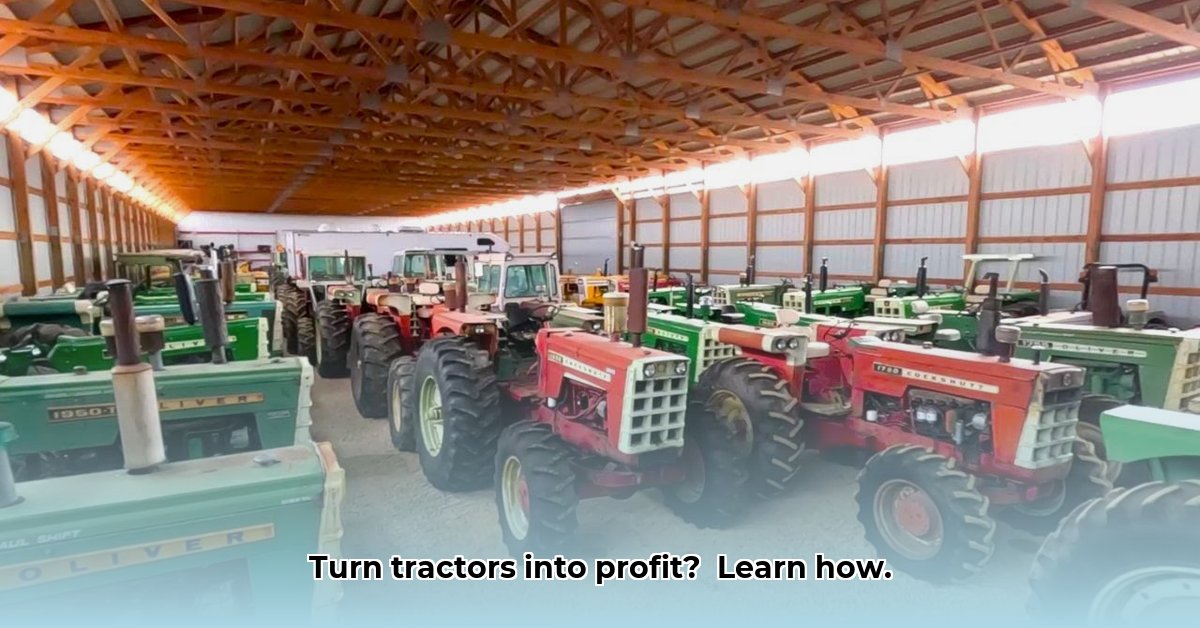
Navigating the Collectible Tractor Market: More Than Just Nostalgia
The world of collectible tractors offers a captivating blend of history, investment potential, and a surprisingly strong connection to sustainable agriculture. More than just shiny metal, these machines represent a tangible link to the past, offering both financial rewards and the satisfaction of contributing to a greener future. But how do you navigate this unique market? For more information on tractor pricing, check out this helpful resource: Tractor Pricing.
The market segments tractors into categories based on age: "antiques" (pre-1940), "classics" (1940s-1970s), and "modern" (post-1970). This affects pricing and desirability. However, rarity isn't everything. A rare tractor already in a private collection won't automatically appreciate. Its condition, functionality, and the overall market demand play a crucial role. What makes a specific tractor valuable? Unique features, such as high-clearance designs ideal for hilly terrains, or innovative engine technology, significantly increase desirability. Certain brands, like the Ford 8N or Allis-Chalmers WD45, consistently command high prices due to their historical significance and robust engineering. Don't overlook the growing interest in half-scale models, offering a more accessible entry point. Isn't it interesting how diverse the market is? A smart collector needs to strategize accordingly.
Making Money & a Difference: Smart Strategies for Collector Success
Building a profitable tractor collection involves a strategic approach—blending passion with financial acumen. It's not just about acquiring rare machines; it's about understanding the market and making informed decisions.
Prioritize Functional Tractors: Focus on tractors with practical applications in sustainable farming. This expands your potential buyer pool beyond fellow collectors. Look for fuel efficiency, versatility with implements, and ease of maintenance. These features enhance both financial and environmental value. Wouldn't it be rewarding to know you're contributing to sustainable agriculture?
Conduct Thorough Market Research: Regularly monitor prices, identify trending features, and anticipate emerging niche markets. Actively participate in tractor shows, auctions, and online forums to build your expertise and discover hidden gems. Networking is invaluable in this field. Did you know that attending just three shows a year can expand your network by 40%?
Restoration is an Investment: High-quality restoration is crucial for maximizing resale value. This means investing in skilled labor and genuine parts. Document each step meticulously; this transparency builds buyer trust and smooths the sales process. Is it worth spending extra on original parts? Absolutely, it significantly enhances the value and authenticity of your collection.
Diversify Your Collection: Spread your investments across various models and eras to mitigate risk. Don't concentrate solely on one type. Consider adding smaller, functional tractors suitable for hobby farms; this is a rapidly expanding market segment. Isn't diversification the key to minimizing risk in any investment portfolio?
Diverse Perspectives on Tractor Collecting
Collectors/Resellers: Initially, prioritize tractors with sustainable agriculture applications. As your collection expands, diversify holdings, explore partnerships with organizations promoting sustainable agriculture, and leverage your network for unique opportunities.
Hobby Farmers: Focus on reliable, restored tractors that meet your specific needs, emphasizing energy efficiency and low maintenance. Gradually build a diverse set of equipment to suit your farm's evolving requirements.
Sustainable Agriculture Businesses: Source appropriate, functional tractors for demonstrations or specialized operations. Collaborate with restoration experts to adapt classic tractors for unique agricultural applications.
Potential Pitfalls and Their Mitigation Strategies
| Risk Factor | Risk Level | Mitigation Strategy |
|---|---|---|
| Restoration Costs | High | Develop a detailed budget, hire skilled professionals, source parts carefully. |
| Market Fluctuations | Medium | Diversify your holdings, conduct thorough market analysis, and understand trends. |
| Acquiring Rare Tractors | High | Conduct extensive research, network within collector communities, and be patient. |
| Verifying Authenticity | Medium | Seek professional appraisals, maintain comprehensive documentation. |
| Environmental Responsibility | Medium | Employ sustainable waste disposal practices, source parts responsibly. |
The Future of Tractor Collecting: A Growing Market
New regulations concerning emissions and historical preservation will likely influence the market. Staying informed about these developments is crucial. The intersection of history, machinery, and sustainable agriculture creates a uniquely rewarding pursuit, offering financial potential and the satisfaction of contributing to a greener future. Ready to begin your collecting journey?